New report - Hidden in plain sight: the case for more inclusive workplace
Tuesday 24 November 2026
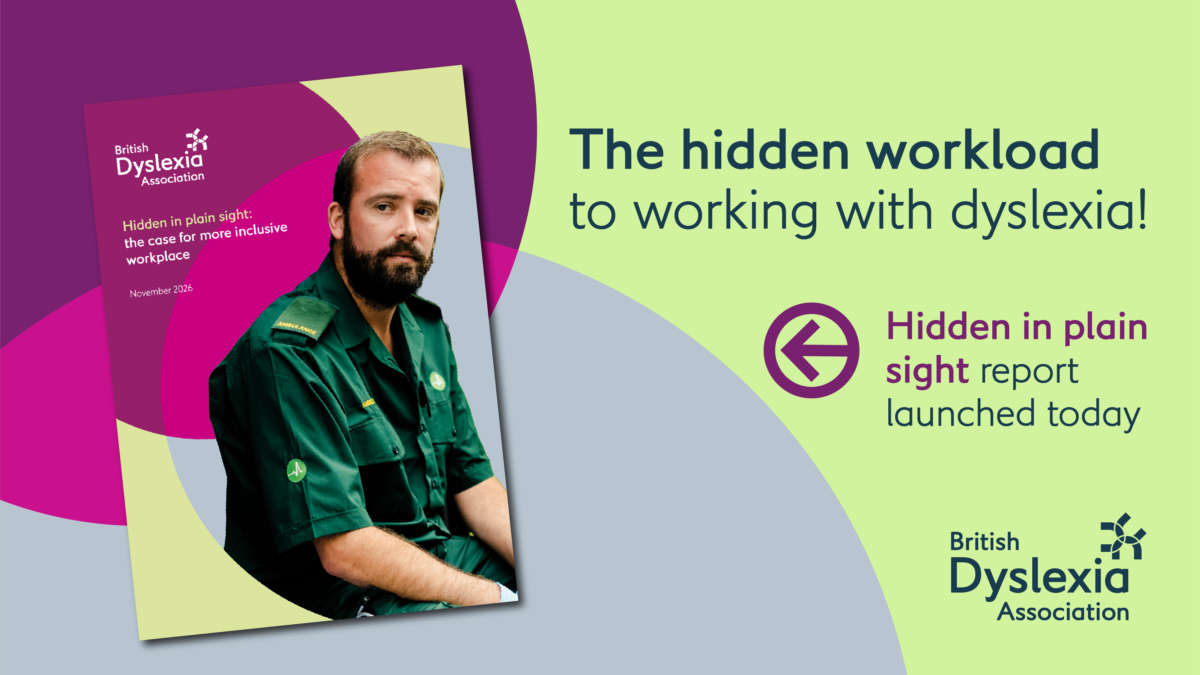
New research from the British Dyslexia Association reveals how workplace barriers are affecting the confidence, mental health and career progression of dyslexic employees, with many spending significant extra time and energy simply to meet everyday workplace expectations.
Dyslexic employees are working harder, spending additional time on everyday tasks and developing their own strategies to overcome workplace barriers, according to a new report we have launched at the British Dyslexia Association (BDA).
Hidden in plain sight: The case for more inclusive workplaces draws on the experiences of more than 1,200 dyslexic adults in employment. It reveals the hidden impact of workplaces that lack understanding, flexibility and appropriate support, and the toll this can take on employees' wellbeing, confidence, productivity and career opportunities.
Despite dyslexia affecting around one in ten people in the UK, including an estimated 3.3 million adults in employment, many dyslexic people continue to feel misunderstood, unsupported or unable to speak openly about their needs.

The hidden cost of working with dyslexia
Our research highlights the significant personal and professional impact of workplace barriers:
- 81% said dyslexia had contributed to work-related stress.
- 75% said dyslexia reduced their confidence at work.
- 55% said dyslexia had made them feel bad about themselves.
- 39% said dyslexia negatively affected their mental health.
- 65% said dyslexia had made career progression more difficult.
The findings also reveal how workplace attitudes can influence employees' experiences. While some reported positive and understanding environments, 31% described attitudes towards dyslexia in their workplace as mixed or neutral, while 8% described them as negative.
For many, the impact goes beyond the tasks set out in their job description. Employees describe spending additional time checking their work, finding alternative ways to complete tasks and developing their own coping strategies to navigate everyday workplace demands.
This additional effort creates a hidden workload. Time and energy that could be spent developing skills, progressing careers and contributing to an organisation's success are instead used to overcome barriers that could often be removed through greater understanding and practical adjustments.
The result can be increased stress and exhaustion, reduced confidence and lost opportunities for both employees and employers.


Ellen Broomé, our CEO, said:
“Dyslexic people should not have to work harder simply to have the same opportunities as their colleagues. Our research reveals the hidden cost many pay, spending additional time and energy compensating for workplaces that fail to understand or support them.
“This is not a question of ability, ambition or talent. It is about the barriers people face and the opportunities lost when workplaces fail to recognise and support different ways of thinking and working.
“Dyslexic people bring valuable skills, creativity and fresh perspectives to organisations. Employers should be unlocking that potential, not allowing unnecessary barriers to undermine it. The responsibility must shift from individuals having to find ways to cope to employers creating environments where people are understood, valued and able to do their best work.
“An inclusive workplace is not about lowering expectations. It is about giving everyone a fair opportunity to meet them. It's time to move from coping to thriving.”
Workplace support should not depend on diagnosis
Our research also highlights the importance of making workplace support accessible to everyone who needs it.
More than two thirds (68%) of respondents said having a formal dyslexia diagnosis made life at work easier. However, many adults remain undiagnosed or choose not to disclose their dyslexia because of concerns about stigma, discrimination or being seen as less capable.
We believe access to workplace support should be based on individual needs, not dependent on having a formal diagnosis. Employers should focus on understanding the barriers employees face and identifying the practical changes that will help them do their jobs effectively.
Simple adjustments can make a significant difference. Assistive technology, flexible working arrangements, accessible communication and supportive management can remove unnecessary barriers and help dyslexic employees work to their strengths.
Our call for more inclusive workplaces
The findings make clear that creating inclusive workplaces requires more than individual employees finding ways to cope. Employers and government have an important role to play in changing workplace practices and making support more accessible.
We are calling for action to:
- Make workplace support needs-led, rather than dependent on a formal diagnosis.
- Embed neuroinclusive practices across recruitment, retention and career progression.
- Improve access to timely workplace adjustments and reform Access to Work.
- Equip managers with the knowledge and confidence to support dyslexic employees.
- Strengthen employer accountability and improve evidence on workplace outcomes.
We believe creating workplaces where dyslexic people can thrive benefits individuals, organisations and the wider economy. By recognising different ways of thinking and working, employers can remove unnecessary barriers, make better use of talent and create environments where everyone has the opportunity to succeed.
We want employers, policymakers and everyone with an interest in creating more inclusive workplaces to read the findings and consider what needs to change.
About the research
We produced the report in partnership with M·E·L Research. It draws on a survey of 1,238 dyslexic adults aged 18 and over who are in employment, alongside qualitative research exploring individual workplace experiences. The quantitative findings were weighted to represent the employed population of England