New Report: GCSE attainment gap for dyslexic pupils unchanged after more than a decade
Thursday 9 July 2026
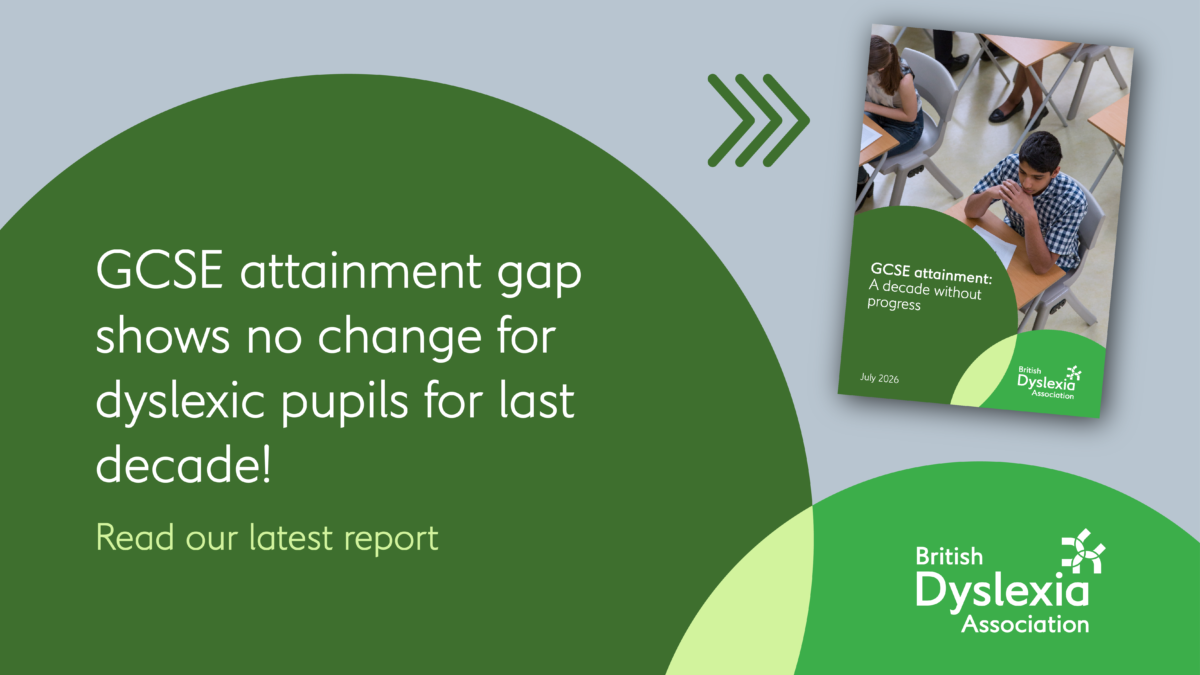
A decade of education reforms has failed to narrow the GCSE attainment gap for pupils with dyslexia, according to our new report published today.
The report analyses Department for Education data on pupils with Specific Learning Difficulties (SpLD), including dyslexia, and compares their GCSE outcomes with pupils who have no identified Special Educational Need (SEN).
The report, GCSE attainment: A decade without progress, reveals that in 2024/25 only two in ten pupils with dyslexia achieved a grade 5 or above in GCSE English and maths, compared with five in ten of pupils with no identified Special Educational Need (SEN) – an attainment gap of 30 percentage points. This gap has remained virtually unchanged for the past three years.
At the standard pass level (grade 4 or above), the picture is equally concerning. Just four in ten pupils with an SpLD achieved a pass in English and maths compared with seven in 10 of their peers without SEN, leaving a 33-percentage point gap.
Although GCSE results for pupils with dyslexia have improved over time, the report shows they have failed to catch up with their peers. More than a decade of national data demonstrates that the education system continues to leave thousands of dyslexic learners at a significant disadvantage and unable to achieve the grades they deserve.
The report argues that this gap is not a reflection of ability, but of systemic barriers in early identification, classroom support and the way exams are assessed.
Ellen Broomé, Chief Executive of the British Dyslexia Association, said
“The findings in this report should concern anyone who cares about educational opportunity. While outcomes for dyslexic learners have improved, they have not caught up with their peers.
“Dyslexia affects around one in ten people. In every school, in every constituency and every workplace, there are dyslexic people whose talents and potential deserve to be recognised and nurtured.
“Dyslexia is not linked to intelligence. We know that dyslexic young people are just as capable as their classmates, yet year after year they leave school with lower qualifications and fewer opportunities, leaving them at higher risk of becoming NEET (not in education, employment and training).
“The Government is preparing to embark on major reforms of the SEND system. Those reforms must deliver meaningful improvements for dyslexic learners. This attainment gap has remained
for more than a decade. If the forthcoming SEND reforms are successful, we can expect to see that gap begin to narrow. If, in five or ten years' time, dyslexic learners are still falling this far behind their peers, then reform will have failed one of the largest groups of children and young people within the SEND system.”
The findings come as the Government prepares major reforms to the Special Educational Needs and Disabilities (SEND) system.
The success of those reforms should be judged on whether they deliver measurable improvements for children and young people with dyslexia and reduce the long-standing attainment gap.
Calling on the Government to:
- ensure SEND reform explicitly addresses the needs of children and young people with dyslexia move from diagnosis-led support to early identification and intervention
- make mainstream classrooms genuinely inclusive through improved teacher training and evidence-based teaching approaches
- reform GCSE assessment and accountability so that exams better reflect subject knowledge rather than literacy difficulties unrelated to the subject being tested
- create more flexible pathways into further education, apprenticeships and employment for learners who do not thrive under traditional examination methods.
The report also highlights the real-life impact of poor GCSE outcomes. Many young people with dyslexia described repeated exam resits, reduced confidence and barriers to progressing into further education, apprenticeships and employment because of English and maths GCSE requirements.