BDA new report - Pathway interrupted Report
Wednesday 2 September 2026
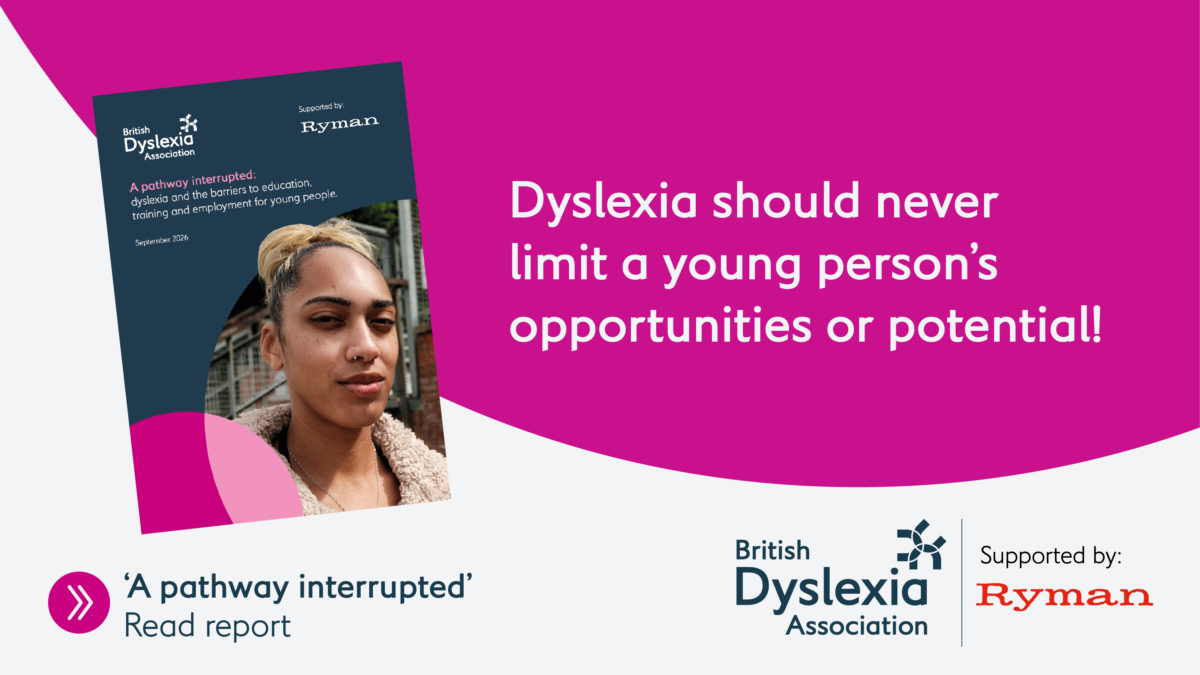
Dyslexic young people say school failed to prepare them for life after education with only half saying that teachers understand dyslexia.
With more than one million young people in the UK currently not in education, employment or training (NEET), new British Dyslexia Association research finds late diagnosis and poor support at school are pushing dyslexic young people out of education, training and work.
The report, supported by Ryman, identifies a chain reaction: late or missed diagnosis leads to poor support in school, driving disengagement and lower attainment. This damages confidence, narrows the routes into further education, training and employment, and leaves many young people at greater risk of becoming NEET.
Being NEET describes a young person’s current situation in relation to education, employment and training, but not necessarily how they see themselves. Many do not identify as ‘NEET’, instead seeing themselves as looking for work, between jobs or courses, or working out what they want to do next.
Key findings
School is not preparing dyslexic young people for adult life:
- Only 1 in 3 dyslexic young people were diagnosed at primary school.
- 54% said teachers did not have enough understanding of dyslexia.
- 70% said school had limited their education, training and career opportunities.
The impact goes beyond the classroom:
- 79% said dyslexia had reduced their confidence, and 76% said it had negatively affected their self-esteem and mental health.
- 87% said the job application process disadvantages dyslexic people.
- 77% worried about disclosing dyslexia to an employer.
Among those who identified as NEET, 89% said their school experience limited their future opportunities, and just 6% felt school had prepared them well for the workplace.

Theo Paphitis, Vice President of the British Dyslexia Association, said:
“This report shines a light on a group of young people who are too often overlooked. Too many dyslexic young people leave education and then lose their way, falling into the gap between school, further education, training and work. We do not even know how many NEET young people are dyslexic. Many will never have been identified. If we are serious about tackling the NEET crisis, dyslexia cannot be left out of the conversation.”
The BDA is calling for
- Early screening and a national pathway for dyslexia diagnosis.
- A fast track to identification and support for young people diagnosed later in school or in post 16 education.
- Teacher training to strengthen support in schools and post 16 settings.
- Alternative assessment methods for GCSEs and A levels.
- Specialist careers advice that understands the challenges of dyslexia.
About the research
The report was produced by the British Dyslexia Association in partnership with M·E·L Research. It combines a survey of 257 dyslexic young people aged 16 to 24 in England with in depth interviews with ten dyslexic young people aged 18 to 24 who are all NEET.